You've had the thought during a Tuesday status meeting: what am I actually building here? Maybe it's a specific frustration, maybe it's just accumulated restlessness. Either way, you've been craving more *meaning* in your work. Maybe you've even started looking at mission-drive roles at nonprofits or sustainable companies you admire.
Ready for the next steps? Wondering if the leap is actually possible, or just a nice idea?
Let's be clear: It's possible. Thousands of people make this move every year. But most advice about it is vague — "network more," "volunteer first," "expect a pay cut" — without saying how much, how long, or what actually changes day to day.
We're here to change that. So, in clear steps, let's walk you through how to make this leap in a way that will land you in a mission-driven role.
Why this move is challenging
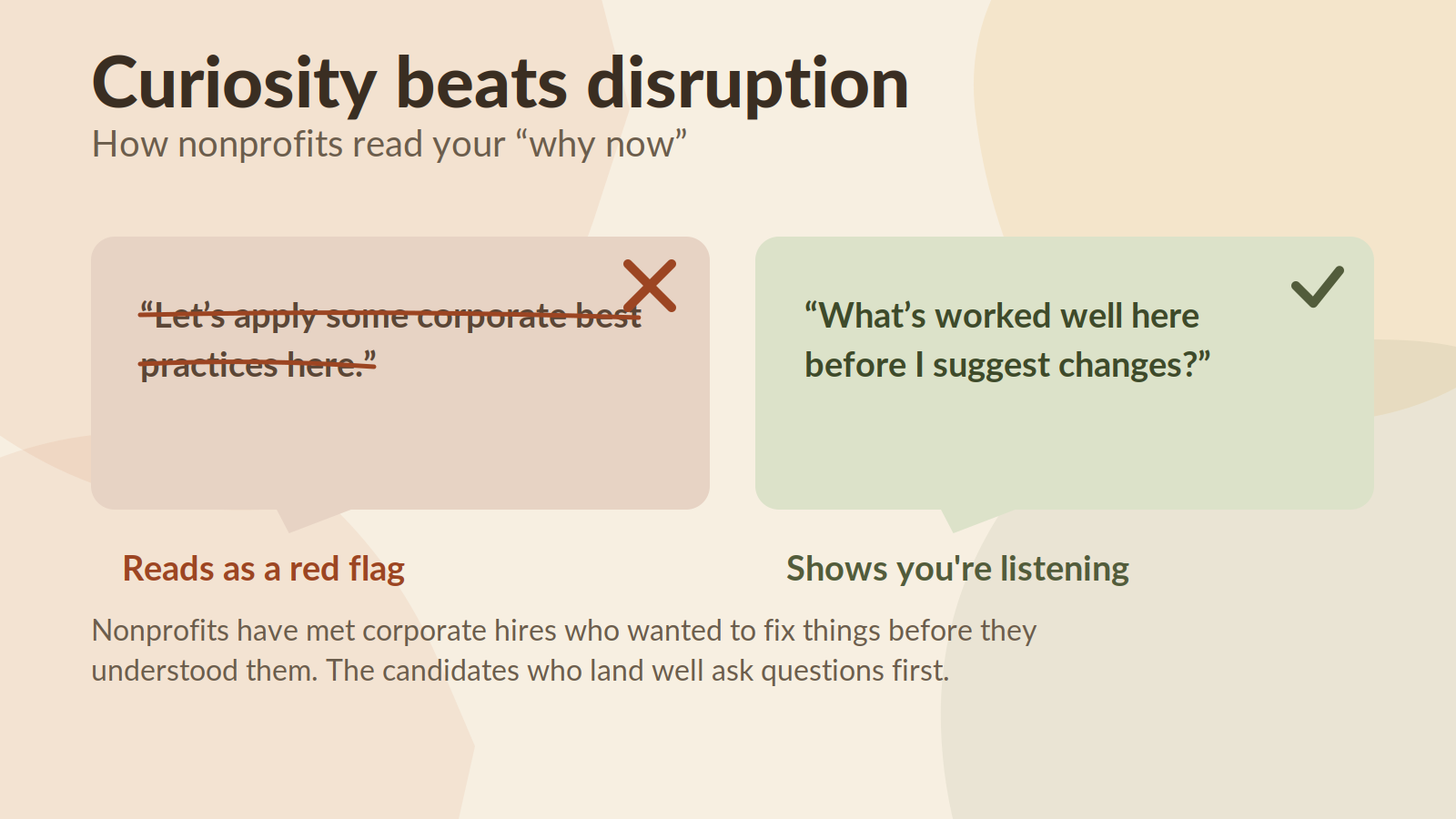
Most nonprofits aren't looking for a corporate rescue mission. A candidate who talks about "disrupting" the sector or applying "best practices" from their old company, without first understanding why things work the way they do, can be off-putting. Nonprofits run on close teamwork, limited budgets, and institutional memory in ways that can look inefficient from the outside and often aren't.
That doesn't mean your experience doesn't transfer. It just means that you need to be especially mindful in your approach.The corporate professionals who land well are the ones who show up curious about how the org works before they show up with opinions about how to fix it. Don't try and be a savior, almighty, or act like you know everything!
What actually changes for you
- Pay: This is the part people dance around, so here are real numbers. A nonprofit program manager nationally earns roughly $50,000 to $86,000, with a median around $66,000, and pay rises with organization size and program area — healthcare, education, and international development nonprofits tend to pay more than arts or advocacy groups. A development director's range is wider and skews higher, commonly landing between $65,000 and $150,000+ depending on the organization's budget and your fundraising track record. If you're coming from a six-figure corporate role, expect a real adjustment, not just a modest one. It's worth running your specific target role through our Salary Guide Tool before you commit to the search, so the number isn't a surprise at offer stage.
- Pace and process. Decisions that a corporate VP could make solo often go through a board, a funder conversation, or a staff consensus process at a nonprofit. Expect more meetings to reach a decision and fewer resources to execute it once made. Feel free to ask about timelines upfront to set your expectations.
- Resourcing. You will likely need do more with a smaller team and a smaller budget than you're used to. The flip side: more visibility into the mission's actual impact, and often a more direct line between your work and an outcome you can see.
How to find openings, including the ones that aren't posted
A few ways to break in:
- Reach out to your network: Scan your network for those who work in the social impact world. Let them know you're thinking of transitioning career fields and graciously ask for advice and warm introductions. Approach these conversations with grace and curiosity.
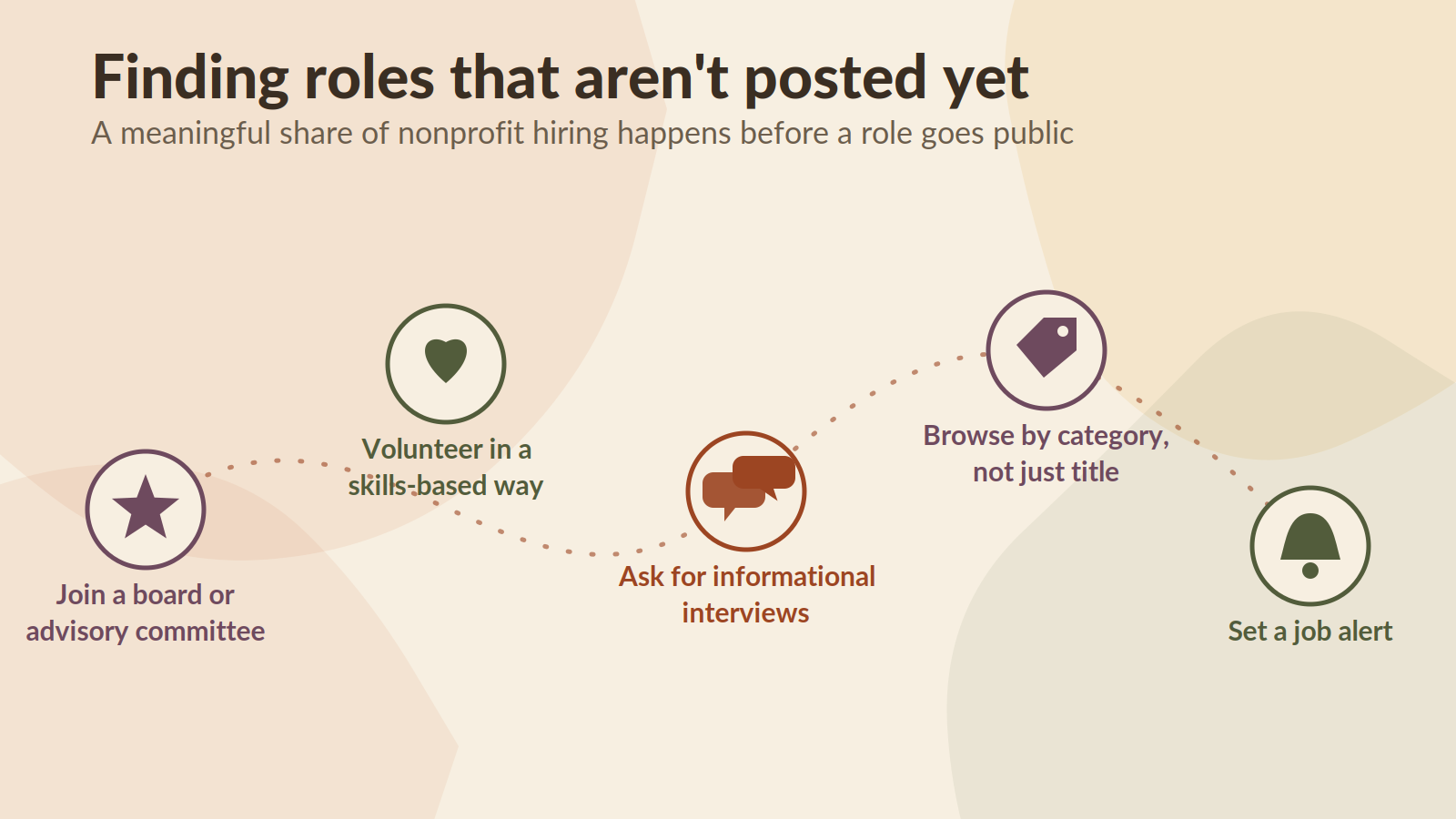
- Join a nonprofit board or advisory committee, even before you're job hunting. It's one of the fastest ways to understand how a nonprofit actually operates, and it helps give concrete proof on your resume that you're serious about moving into this world.
- Volunteer in a skills-based capacity — helping with a grant proposal, a website, a data project — rather than only event-day volunteering. It shows your tangible work, not just your vague interest.
- Start to search for jobs so you can familiarize yourself with roles, salary expectations, and so forth. Browse job openings on The Impact Job and set up a job alert to let roles come right to you.
Double check your resume
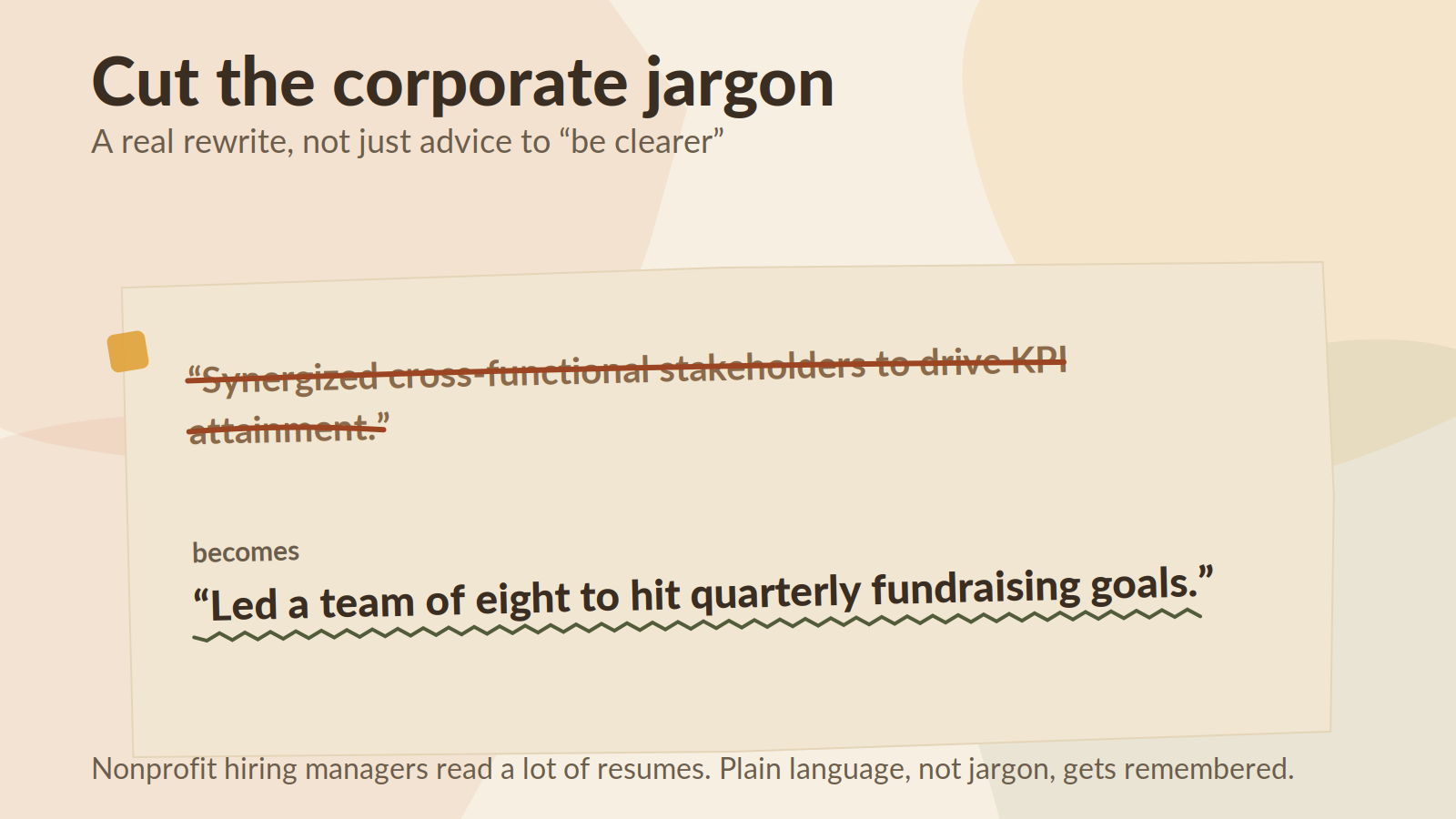
- Cut the corporate jargon. "Synergized cross-functional stakeholders to drive KPI attainment" should become "led a team of eight to hit quarterly fundraising goals." Nonprofit hiring managers read a lot of resumes and jargon reads as evasive, not impressive.
- Quantify impact in mission terms where you can. If your corporate work has any adjacent social impact — a pro bono project, a diversity initiative, community partnerships — put it near the top.
- Don't over-scrub your corporate identity. A resume that hides where you came from can read as evasive too. Own the background; explain the "why now" clearly instead in a cover letter, within the professional summary section of your resume, and early in your interview.
What to expect in interviews
The question you will get, in some form, is why now, and why this? Have a real answer ready, not a vague one about "wanting to make a difference." Nonprofits have heard that from corporate candidates before, and some of those hires didn't work out because the motivation didn't hold up under the actual conditions of the job. A stronger answer connects something specific about your background to something specific about their mission.
You may also get tested on budget literacy, grant cycles, or board dynamics you haven't dealt with before. It's fine to say plainly that you're still learning that part, paired with a concrete example of how quickly you've picked up unfamiliar systems in the past.
The first 90 days - what to expect
Give yourself time to unlearn some instincts. The corporate habit of moving fast and asking forgiveness later can read as disrespectful of process in a consensus-driven nonprofit. Spend the first few weeks genuinely learning how decisions get made before you propose changing them. Ask who has been here longest and listen to their read on "why we do it this way" before assuming it's inefficiency rather than institutional knowledge.
The organizations that get the most from corporate hires are the ones where the hire spent real time listening first. That's also usually where the hire stays longest.
FAQ
Will I definitely take a pay cut moving from corporate to nonprofit?
Often, yes, especially at the individual-contributor and manager level. The gap narrows or disappears at senior leadership roles in well-funded organizations, and some nonprofits offer benefits like loan forgiveness eligibility (PSLF) that offset part of the difference.
How long does a corporate-to-nonprofit transition typically take?
Plan for a longer search than a same-sector move, often several months to a year, especially if you're also building nonprofit-specific experience through board work or volunteering along the way.
Do I need nonprofit experience to get an interview?
Not always, but a track record of some kind — board service, volunteer leadership, a related side project — meaningfully improves your odds, especially for roles above entry level.
Is joining a nonprofit board worth doing before I start job hunting?
Yes. It builds relevant experience, expands your network in the sector, and gives you a realistic look at nonprofit operations before you commit to a full career change.
What nonprofit roles are easiest for corporate professionals to move into?
Operations, finance, HR/people, and program or project management roles tend to transfer most directly, since the core skills map closely to corporate equivalents.